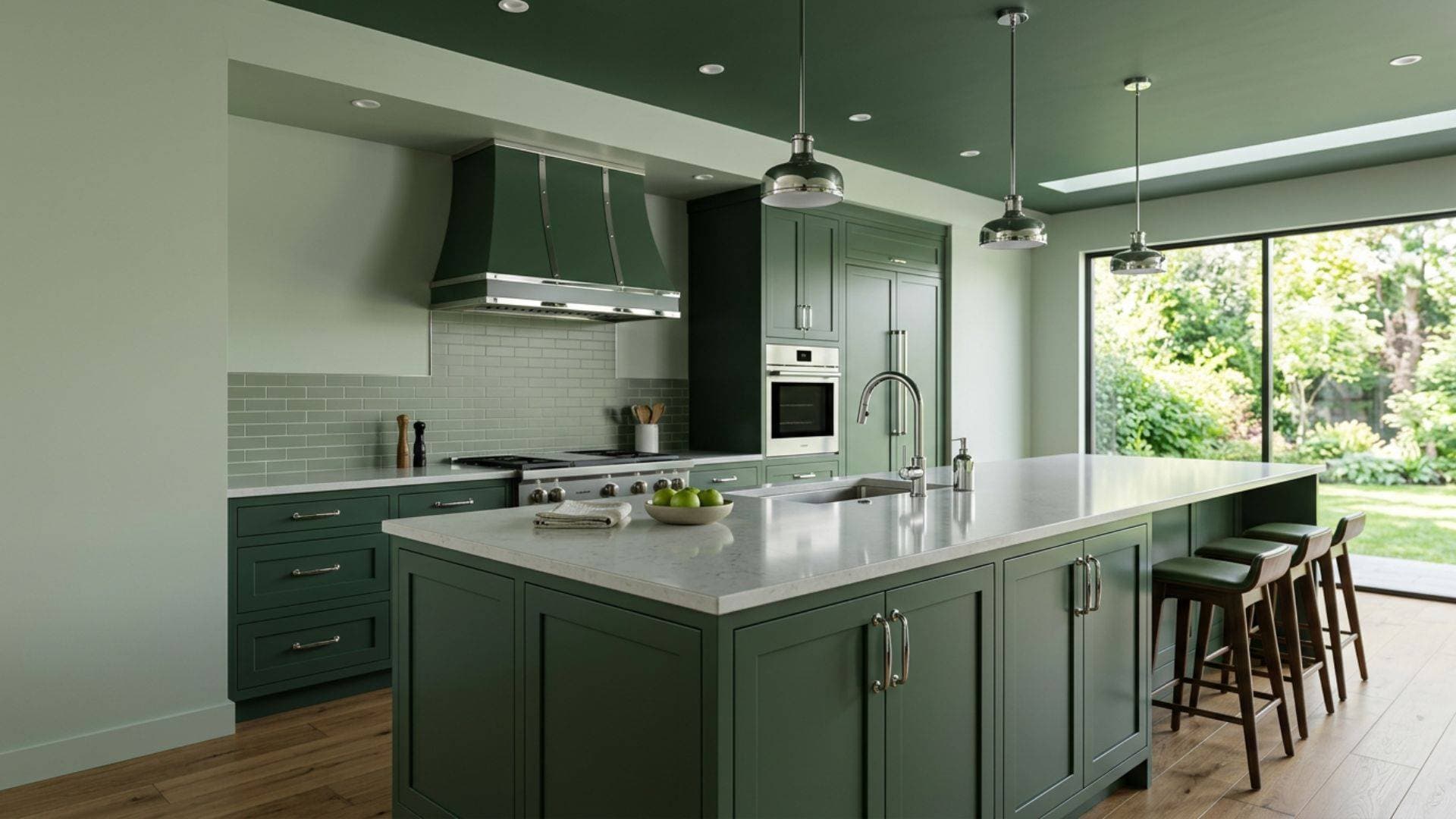
Colour capping is the paint technique of the year. Instead of choosing just one colour and using it to paint all four walls, top to bottom, you choose multiple shades of the same colour and apply them so they transition from palest to darkest. The ‘cap’ is the ceiling, which you’re expected to paint in a colour, and not your usual brilliant white.
Change the proportions of a room
When used carefully, colour capping can make a room feel bigger or grander than it actually is. Paler shades on the lower and mid sections help push walls out and create a sense of space. You can also trick the brain into thinking the ceiling is higher than it is by training the eye to move upwards towards darker colours.
While colour capping advice points to starting with the palest shade at the bottom, working up to the darkest shade, don’t be frightened to invert the formula. Having the lightest shade on the coving and ceiling can help if you’re trying to create more light in a room. Darker shades at the bottom can also help hide imperfections, especially if you use matt-finish paint. Don’t mistake colour capping with ombre, however, as there are crisp linear distinctions between each shade, rather than a merging of colours.
Highlighting architectural features
Colour capping works extremely well in homes that have ornate flourishes and architectural features, whether they are original or newly installed. The eye can be drawn towards detailed cornicing, corbels and ceiling roses when the darkest shade of paint is used at the very top portion of a wall and across the ceiling. Homeowners can also use skirting boards, dado rails and picture rails to horizontally divide walls, dictating where lighter shades of paint go.
Colours for capping
The boldest, bravest decorators may feel confident straying into the very dark side when choosing a colour but the wrong choice can make a room feel more poky and gloomy than it actually is. Pale can be very interesting and appealing, so our advice is to stick with light neutrals. Start by choosing one colour – such as beige, cream, grey or green – and identify three or four shades within that colour family.
The leading paint manufacturers can help if you’re struggling. They often group shades together in families, making it easy to pick paints that are subtly different yet similar. Try Lick’s Light and Airy collection, Dulux’s white paints (all with gentle hints of colour) and Coat’s Yard Party grey/green selection. Another failsafe is Little Greene’s ‘Colour Scales’, which clearly shows all the shades of the same colour family in one place, such as Aquamarine, China Clay and Rolling Fog.
If you don’t suffer from analysis paralysis, the world’s your oyster. Browse the paint cards at B&Q, where Valspar’s range of 2,000 pre-selected colours is the largest in Europe! More choice is available at Brewers, where off-the-shelf tins from multiple brands, ready-to-mix colours and paint matching services co-exist.
Paint finishes
Read the manufacturer’s recommendations to ensure the paint you buy is suitable for your wall surface. Pay special attention if you are painting a radiator to match the wall shade as not all paints are suitable for metalwork. If one of your main colour capping objectives is to make the upper part of a room feel brighter and more spacious, consider using a silk, soft sheen or specific light-reflecting paint for the ceiling. In contrast, try to avoid gloss paint for woodwork features, such as architraves, door frames, dado rails and picture rails. Instead, buy paint in satin, eggshell and matt finishes that are suitable for wood.
Double drench instead
If your room lacks the architectural details to naturally create sections, don’t worry. Double drenching is a tertiary trend that sits in between colour drenching and colour capping. You can choose two very similar shades of the same colour, applying one to the skirting board and walls, and another to the ceiling. This will deliver a subtle impact.
Are you tempted to try colour capping or will you stick with safe white? Let us know your house plans, especially if they involve moving in search of a new interior project.
Share this article

Sign up for our newsletter
Subscribe to receive the latest property market information to your inbox, full of market knowledge and tips for your home.
You may unsubscribe at any time. See our Privacy Policy.

